
· by Michael Blair, Nashville's Painters
Duration is the most useful thing on a painting quote and the least examined. Painting itself is fast; preparation is not, and when we compare a two-day quote with a five-day quote for the same house, nearly all of the difference turns out to be preparation one crew has left out.
How many days does an interior paint job take?
On our own interior painting jobs, a single average room with minor patching usually takes one painter about a day, cutting in and two coats included. A whole three-bedroom interior with ceilings and trim usually runs four to seven working days for a small crew. Those figures come from the houses we have painted around Nashville, and the walk-through is where we firm them up for yours.
Trim and doors add disproportionate time. They need sanding, careful cutting in and a harder-drying enamel, and we wait out the recoat time printed on the product before the second coat goes on. We also keep air moving through every room we are working in: the EPA’s page on volatile organic compounds lists paint among the household sources, says elevated levels can persist long after the work is finished, and advises increasing ventilation.
How long does it take to paint a house exterior?
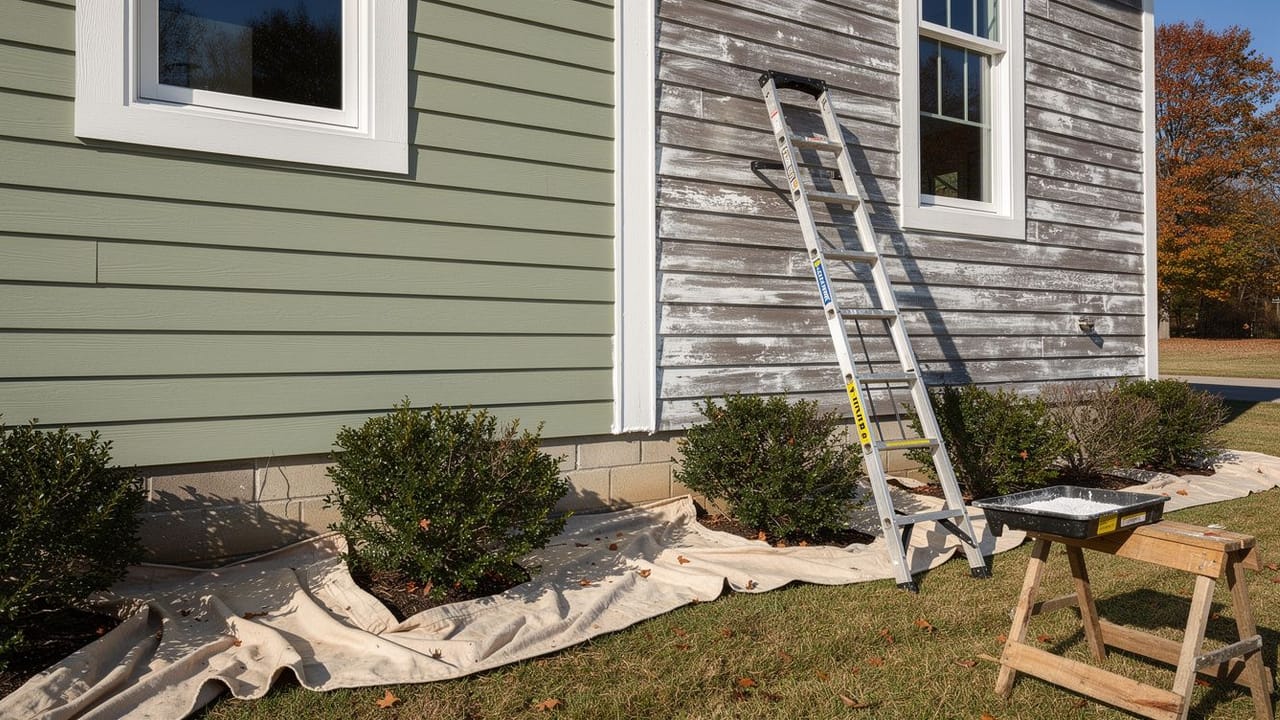
A typical two-story house takes us roughly five to ten working days, and weather stretches it. Washing comes first. The Forest Service’s Wood Handbook chapter on finishing wood describes scrubbing, rinsing thoroughly, and keeping a power-washer’s pressure low with the stream pointed down so water is not driven behind the siding. After that the wall has to dry fully, however long the weather and the paint label say that takes, before anything is scraped or coated.
A quote with no drying time after washing is planning to paint over damp wood. The same handbook names water first among the most common causes of paint failing early, alongside inadequate surface preparation and too thin a film. It also passes on the paint makers’ advice to apply the first top coat within two weeks of the primer and the second within two weeks of the first, and Purdue Extension’s bulletin on paint failure problems puts caulking large cracks and openings after the bare wood is treated and primed.
Temperature sets the other limit. The handbook says latex paint should go on at 50°F or above, with that temperature expected to hold for 24 hours, and Sherwin-Williams’ exterior application FAQ wants the temperature in the product’s range and above the dew point for at least 48 hours after application. A run of cold nights can stall a job for days, which is why we wrote separately about the last month to paint outside in Nashville.
- Wash and rinse, then let the surface dry fully
- Scrape, sand and feather edges
- Spot prime bare wood and stains
- Caulk after priming
- Two finish coats with correct recoat intervals
What makes a paint job take longer?
A color change from dark to light, which in our experience usually needs an extra coat. Textured walls, which soak up more paint and take longer to cut in. Older houses with settled trim and gaps to fill. And any work that disturbs paint in a house built before 1978.
That last one is a legal requirement rather than a preference. The EPA’s Renovation, Repair and Painting Program requires anyone paid to disturb painted surfaces in a pre-1978 home to be certified, with the workers trained in lead-safe work practices; the rule generally does not cover homeowners working on their own house. The job is then planned and finished around those practices, which the EPA’s Steps to Lead Safe Renovation, Repair and Painting pamphlet walks through for contractors and homeowners. On Nashville’s older houses it adds days and cost to our quotes, and our post on lead paint in a pre-1978 Nashville house explains what it means for the owner.
Questions worth asking on the quote
How many coats, and is that on every surface or only where needed. What preparation is included and what is charged as extra if it is found. Which product line, by name, so you can look up its coverage, recoat time and temperature limits on the maker’s data sheet yourself.
And whether the crew painting is the crew that quoted. Subcontracted work is not a problem in itself, but you should know who is responsible if something needs putting right. We answer every one of these on our own quotes, so ask us for a free estimate and we will walk the house before we put a number of days on it.
Sources
- U.S. EPA, Volatile Organic Compounds’ Impact on Indoor Air Quality — Paints contain organic solvents; elevated levels can persist after the activity; increase ventilation when using products that emit VOCs
- USDA Forest Service, Forest Products Laboratory, Wood Handbook (FPL-GTR-190, 2010), Chapter 16: Finishing of Wood — Scrub, rinse and low-pressure washing; water, poor preparation and thin film as common causes of early paint failure; top coats within two weeks; one top coat halves service life; latex at 50°F or above for 24 hours
- Purdue Extension, NCR-133 Paint Failure Problems and Their Cure — Caulk large cracks and openings after treating and priming
- Sherwin-Williams, Exterior: Product Application Frequently Asked Questions — Temperature in range and above the dew point for at least 48 hours after application
- U.S. EPA, Renovation, Repair and Painting Program — Paid work that disturbs painted surfaces in pre-1978 homes requires certification and lead-safe work practices; generally not homeowners on their own home
- U.S. EPA, Steps to Lead Safe Renovation, Repair and Painting — Pamphlet for contractors and homeowners on planning and completing pre-1978 work with lead-safe practices
FAQ
How Long a Paint Job Actually Takes — questions
Do I need to move out while my house is painted?
Usually not for interior work. We normally work room by room, so most of the house stays usable while we are there. Paint gives off solvents as it dries, and the EPA advises increasing ventilation when using products that release VOCs, so we keep fresh air moving through the rooms being painted. Staying elsewhere is worth considering for whole-house work with oil-based trim enamel, or if anyone in the household is sensitive to fumes.
How many coats of paint do I actually need?
Two, in almost every case on our jobs. One coat over a similar existing color can look acceptable while wet and show patchiness once it dries. On exterior wood, the Forest Service Wood Handbook says a primer with only one top coat lasts about half as long as a primer with two. We add a third coat for dramatic color changes and for deep reds, which in our experience cover poorly whatever the brand.
Is it cheaper to paint in winter?
For interior work it can be, depending on the job. Winter is our quieter season for indoor painting, so there is more choice of dates, and the quote will show whether that changes the price. Exterior work is the opposite. The Forest Service Wood Handbook says latex paint should go on at 50°F or above and stay there for 24 hours, and in our experience too few winter days in Middle Tennessee hold that through the night to run an exterior job efficiently.
How long should you wait between coats of paint?
As long as the recoat time printed on the product says, which depends on the paint and the conditions. On exterior wood the Wood Handbook passes on paint makers’ advice to apply the first top coat within two weeks of the primer and the second within two weeks of the first.