
· by Michael Blair, Nashville's Painters
In 1978 the federal government banned the sale of lead-based paint for use in homes, and EPA’s Renovation, Repair and Painting program page estimates that about three-quarters of the homes in the United States built before then still contain some of it. If your house is that old, any lead will be in the layers that went on before 1978, on the trim, windows, doors and siding, under whatever has been painted since. That does not make the house dangerous to live in. The same EPA page says children can live safely in these homes as long as the paint and surfaces are in good condition and kept clean. What it changes is how the paint has to be prepared, and it is the reason a painter should ask the age of the house before quoting it.
Where the risk actually comes from
EPA’s guide to reducing the risk of lead exposure at home says lead-based paint in good shape is usually not a problem. Old or worn paint is another matter, especially on doors, sills and other surfaces that rub, because that is where the chips and dust come from. The Tennessee Department of Health’s childhood lead program names sanding, scraping and burning during paint removal as the ways lead gets into the air, and exterior chips and dust as the way it gets into soil. Young children take in the most, since they crawl, play on floors and put fingers and toys in their mouths, and the state program counts children under three as the ones at greatest risk. Adults are exposed too. EPA notes that lead dust from the work ends up on a worker’s skin, hair and clothing and can travel home in the car.
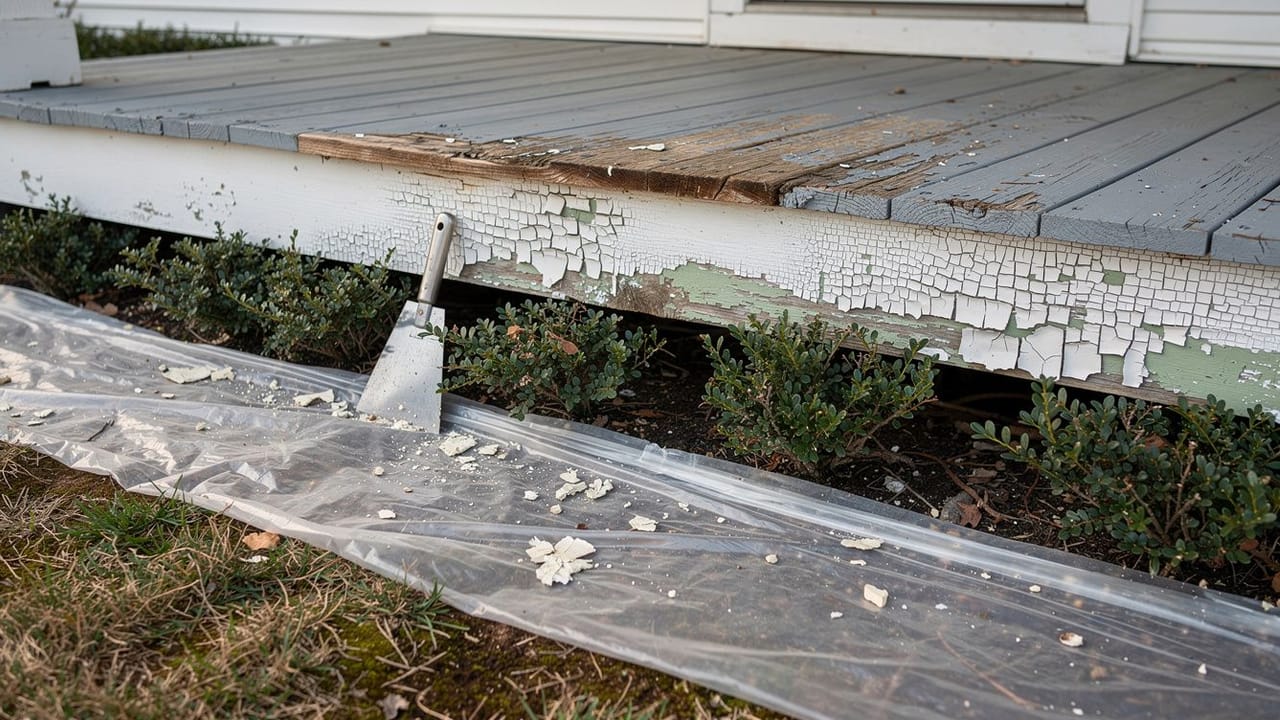
The places that matter most are the ones that rub. The health department lists windows and sills, doors and frames, stairs, banisters and railings, and porches and fences as spots where painted surfaces grind against each other and make dust. A window sash running up and down its track is the everyday example, and a porch floor wears through underfoot. Siding that earlier owners scraped can leave chips in the soil along the foundation, and EPA advises growing vegetables at least 10 feet from buildings, where lead levels are likely higher. When we price exterior painting on an older house, that strip of ground is part of the job.
How do you find out if a house has lead paint?
EPA’s advice for a house built before 1978 is to have it tested by a certified lead inspector or risk assessor, or to assume it has lead-based paint. Until someone shows otherwise, we work on the second assumption and give the friction surfaces the closest attention. EPA’s page on lead test kits is careful about what the recognized kits can do: a negative result can reliably show that regulated lead paint is not present, and no kit has yet met both of the rule’s performance criteria. Under 40 CFR Part 745, Subpart E, the federal rule itself, a kit result only clears a job when a certified renovator does the testing.
For a fuller answer, a certified inspector or risk assessor tests the painted surfaces in the house. According to the health department, they use x-ray fluorescence machines, usually called XRF, or send paint chips off to a lab. The same page warns that a general home inspector may not have lead training or state certification, so check the qualifications of whoever you hire. If you are buying an older house with small children or planning a big remodel, we would want that report in hand before anyone picks up a scraper. And if you are worried a child has already been exposed, ask your child’s health care provider about a blood lead test, which the state program also covers.
What does the EPA require of a painter on older homes?
EPA’s Renovation, Repair and Painting rule requires anyone paid to do work that disturbs painted surfaces in homes, child care facilities and preschools built before 1978 to be certified, sole proprietors included. Tennessee is not one of the states EPA has authorized to run its own program, so here the federal rule and EPA certification apply directly. Homeowners working on their own house are generally outside it, unless they rent out all or part of the house or are buying, renovating and reselling houses. Small jobs count as minor repair and maintenance: the rule sets the line at 6 square feet of painted surface per room inside and 20 square feet outside, provided no prohibited practice is used and no window is replaced. Above that, the job needs an EPA-certified firm with a certified renovator responsible for it. Within the 60 days before work starts, the firm has to give the owner EPA’s Renovate Right pamphlet and get a signed acknowledgment, or mail it at least 7 days ahead. If a painter quoting your 1920s house has never mentioned any of this, ask.
Lead-safe practice looks different from an ordinary paint job, and the rule spells it out. The firm posts signs warning people to stay out of the work area. Inside, plastic sheeting covers the floor at least 6 feet past the work; outside, it covers the ground 10 feet past it, or farther if that is what it takes to catch the debris, and when the work is within 10 feet of a property line the firm has to put up vertical containment or take equivalent precautions. Open-flame burning is banned, heat guns are allowed only below 1,100°F, and power sanding or grinding is allowed only with a shroud and a HEPA vacuum attachment. Cleanup means HEPA vacuuming and wet wiping and mopping, after which a certified renovator inspects the area and checks it with cleaning verification cloths. EPA also points out that sweeping puts settled lead dust back into the air, which is one more reason a broom is the wrong tool.
- Ask whether the firm is EPA lead-safe certified, and ask to see its certificate
- Expect the Renovate Right pamphlet before work begins
- Expect warning signs, plastic sheeting and HEPA cleanup
- No torch on old paint, no heat gun at 1,100°F or hotter, and no power sanding without a shroud and HEPA vacuum
Why does a lead-safe paint quote cost more?
Containment, careful prep and the cleanup take time, so a lead-safe quote on an older house is hard to compare with one that leaves them out. A painter paid to work on a 1910 porch without certification, without plastic on the ground or without the cleanup is breaking the rule, and the chips end up in your yard and your neighbor’s. When two quotes are far apart, ask each painter to walk you through the containment and the cleanup, since the rule requires both on every job it covers.
On most older houses we leave sound paint where it is, prepare only what is loose or failing, and prime and finish over the rest; our post on when primer is actually necessary covers that step. When our painters take on a house built before 1978, we treat it as lead-safe work from the first scrape, set up containment before prep begins, and leave the site cleaned and checked. Windows are one of the rub points the health department names, so on a house with badly worn sashes they are worth discussing alongside the paint, keeping in mind that replacing them is never minor repair under the rule. If your house predates 1978, tell us the year when you ask for an estimate, and we will plan the prep around it.
Sources
- U.S. EPA, Lead Renovation, Repair and Painting Program — 1978 ban on lead paint for home use; about three-quarters of pre-1978 U.S. homes still contain some; children can live safely while paint is in good condition; paid work must be certified, sole proprietors included; Tennessee not an authorized state; homeowner exemption and its limits
- U.S. EPA, Reduce the Risk of Lead Exposure at Home — Paint in good shape usually not a problem; friction surfaces make chips and dust; how young children and workers are exposed; produce 10 feet from buildings; test or assume lead; sweeping stirs settled dust
- Tennessee Department of Health, Childhood Lead Poisoning Prevention Program — Sanding, scraping and burning contaminate air; exterior chips contaminate soil; the friction surfaces; children under 3 at greatest risk; XRF and lab testing; home inspector qualifications; blood lead testing
- U.S. EPA, Lead Test Kits — Recognized kits reliably show regulated lead paint is not present; no kit has met both RRP performance criteria
- eCFR, 40 CFR Part 745 Subpart E, Residential Property Renovation — Test kit used by a certified renovator; minor repair thresholds of 6 and 20 square feet; window replacement; Renovate Right delivery 60 and 7 days; signs, sheeting distances and vertical containment; prohibited practices and the 1,100°F heat gun limit; HEPA and wet cleanup with verification
- U.S. EPA, Renovate Right — The pamphlet a certified firm hands the owner before work starts
FAQ
Lead Paint in a Pre-1978 Nashville House — questions
Does my painter need lead certification to paint my older house?
If the house was built before 1978 and the paid work disturbs more than 6 square feet of painted surface in a room inside, or more than 20 square feet outside, the federal rule requires an EPA-certified firm and a certified renovator using lead-safe practices. Window replacement is covered whatever its size. Tennessee has no state program of its own, so EPA certification is the one to ask about, and it is fair to ask to see it before hiring.
Can I just paint over lead paint?
Often, yes. EPA’s guidance is that lead paint in good shape is usually not a problem, so sound paint can stay where it is under new primer and finish. The loose and failing paint still has to be prepared with lead-safe methods, and surfaces that rub, such as window sashes, can keep wearing through to make dust, so they may need more than a new coat.
How do I know if my house has lead paint?
EPA’s advice for a house built before 1978 is to have a certified inspector or risk assessor test it, or to assume it has lead paint. A recognized test kit is reliable when it shows lead paint is not present, and a certified inspector can test the whole house with an XRF instrument or by sending paint chips to a lab. Have it done before any work that will disturb old paint.
Is it safe to live in a house with lead paint?
Generally yes, as long as the paint is in good condition and the surfaces are kept clean; EPA says children can live safely in these homes on those terms. The risk comes from worn paint on surfaces that rub, such as window sashes, and from dust and chips when old paint is sanded or scraped.