
· by Michael Blair, Nashville's Painters
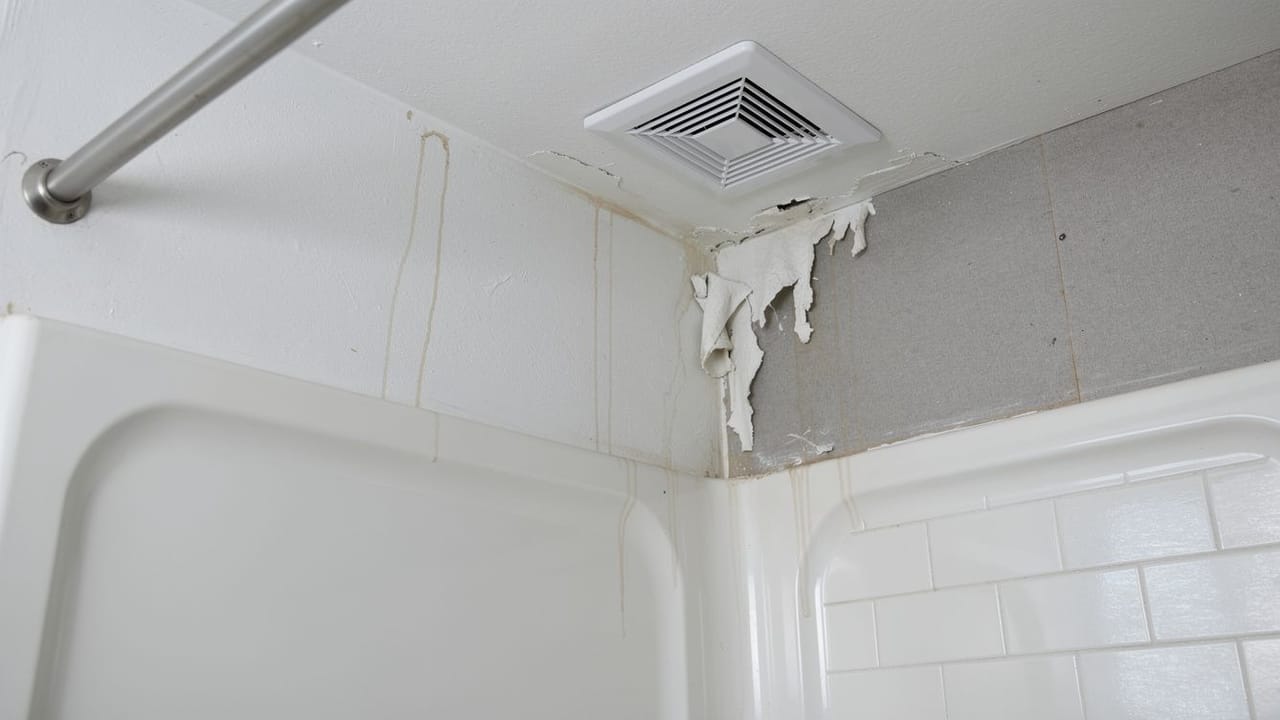
The bathroom ceiling takes more steam than any other painted surface in the house. A shower loads the air with warm moisture, and the EPA’s guidance on controlling moisture at home explains that in cold weather that moisture condenses on cold surfaces; in a bathroom, the ceiling is the first thing the steam reaches. So we treat the peeling as the symptom. The order of work is moisture, then surface, then paint, and the paint is the shortest part of an interior painting job like this one.
What makes bathroom ceiling paint peel?
Condensation comes first. Paint does not seal water out for good: Dunn-Edwards’ technical bulletin on surfactant leaching points out that even a fully cured paint film is permeable, and that water can get into it given enough time and volume. A bathroom ceiling gets both every day the shower runs, and more of it when there’s an uninsulated attic overhead in January.
The second thing we look at is what was painted before. On a ceiling that has peeled, we check for a patch that was never primed, a glossy coat that was never sanded, or old flaking paint somebody rolled straight over, and we scrape back to paint that is holding before anything new goes on. Brown streaks or drips with no peeling are a different problem called surfactant leaching. The Dunn-Edwards bulletin describes tan, brown or glossy stains on interior water-based paint exposed to bathroom moisture, left by water-soluble ingredients such as surfactants and thickeners working out of the film. It most often follows a shower used within the first several days after painting, though the bulletin says a fully cured film can leach too, and darker colors are more prone to it.
What should be fixed before repainting a bathroom ceiling?
Start with the fan. Pacific Northwest National Laboratory’s Building America guide to bathroom exhaust fans recommends leaving it on for one hour after a shower, and a timer switch so it shuts itself off when the hour is up. The same guide shows the simplest check there is: a fan should have enough suction to hold a tissue against the grille. If yours can’t, find out why before anyone paints. It may need cleaning or replacing, or the duct may not end where it should.
Both that guide and the EPA say a bathroom fan should vent outdoors, never into the attic, so go up and see where the duct actually goes. The EPA’s answer for a cold surface where moisture condenses is to warm it, and insulation is one of the ways it names; a bare or thin patch of attic insulation over the bathroom is worth sorting out before we paint. If a ceiling peels where no shower runs at all, we look for water coming from the other side first, a leak from the floor above or around a roof penetration. No fan fixes that.
How should a peeling ceiling be prepared?
In a house built before 1978, we find out what is in the old paint before anyone scrapes. The EPA’s lead-safe renovation page says roughly three-quarters of US homes built before 1978 still contain some lead-based paint, and its Renovation, Repair and Painting rule requires anyone paid to disturb painted surfaces in those homes to be certified. Our post on lead paint in pre-1978 Nashville houses covers what that changes on the job. With that settled, we scrape every loose edge until the paint stops coming away and feather the transitions with sandpaper so the repair doesn’t show as a ridge.
Mildew comes off before paint goes on. The EPA’s page on using bleach for mold says a biocide such as chlorine bleach is not recommended as a routine part of mold cleanup, that dead mold can still cause allergic reactions and has to be removed, and that bleach must never be mixed with cleaners that contain ammonia. We scrub it off with detergent and water, rinse, and let the ceiling dry completely. The EPA adds that the spores left behind won’t grow once the moisture problem is fixed, which is one more reason the fan comes first.
Bare or rough patches get skimmed with joint compound, sanded and primed, and anything deeper is drywall repair before it is painting. A ceiling that has leached gets washed before it is recoated, since Dunn-Edwards warns that surfactant residue left on a surface, which it calls blooming, can interfere with the adhesion of later coats. Over old water marks we use a stain-blocking primer; our post on when primer is actually necessary covers the other surfaces that need it.
- Scrape, sand and feather every loose area
- Scrub off mildew with detergent and water, then let the ceiling dry fully
- Wash off any leaching residue before recoating
- Primer on bare spots, a stain blocker over water marks
- Two finish coats, then several days before the shower runs
Which paint, and how long to wait
No sheen makes a ceiling waterproof, and that permeable cured film is why ventilation matters more than what comes out of the can. On a ceiling that has peeled before, we use a paint sold for bathrooms or a good acrylic in satin rather than flat, mostly because it can be wiped down, and we read the product’s data sheet for what it actually claims about humidity and mildew. Our guide to choosing paint sheen room by room goes through the trade-offs.
Then leave it alone. Dunn-Edwards advises keeping the shower off for several days, until the painted surface is fully dry, and letting fresh paint in bathrooms cure and harden before it meets steam or condensation. Darker colors carry more colorant and with it more surfactant, so give them the long end of that wait. Follow the label for the exact time and run the fan when the room goes back into use. If you’d like us to look at a ceiling that keeps peeling, ask us for a free estimate.
Sources
- Dunn-Edwards, Technical Bulletin: Surfactant Leaching (TB 1224, 2024) — Cured paint film is permeable; tan, brown or glossy leaching stains on interior paint in bathrooms; darker colors more prone; residue can interfere with adhesion of later coats; avoid the shower for several days; wash off within a week; may recur once or twice; no threat to the film
- Pacific Northwest National Laboratory, Building America Solution Center: Bathroom Exhaust Fans — Run the fan one hour after a shower; timer switch; fan should hold a tissue; vent outdoors, not into the attic
- US EPA, What are the main ways to control moisture in your home? — Moisture condenses on cold surfaces in cold weather; vent bathroom fans outside, not into the attic; raise the temperature of cold surfaces with insulation
- US EPA, Should I use bleach to clean up mold? — Bleach not recommended as routine mold cleanup; never mix bleach with ammonia; dead mold must be removed; spores will not grow once moisture is fixed
- US EPA, Get Lead Safe: Renovation, Repair and Painting Program — About three-quarters of pre-1978 US homes still contain some lead-based paint; anyone paid to disturb paint in them must be certified
FAQ
Paint Peeling Off the Bathroom Ceiling — questions
Why does my bathroom ceiling paint keep peeling?
Moisture is getting into the paint, most often from shower steam condensing on the ceiling because the exhaust fan is weak, is switched off too soon or vents into the attic instead of outside. The Building America guide recommends a fan that vents outdoors and runs for an hour after a shower. Until the moisture is under control, new paint tends to go the same way, so fix the ventilation, then prepare and repaint.
What are the brown drips on my bathroom ceiling?
Surfactant leaching: water-soluble ingredients in water-based paint drawn to the surface by moisture, leaving tan, brown or glossy streaks. It usually follows a shower used in the first several days after painting. Dunn-Edwards says it can typically be washed off within a week, once the paint has hardened (longer for dark colors), with a mild soapy solution and a soft cloth, then rinsed. It may come back once or twice before it stops, and it does not harm the paint film.
Should a bathroom ceiling be flat or satin?
On a ceiling that has peeled, we use satin or a paint sold for bathrooms rather than standard flat, mainly because it can be wiped clean. No sheen keeps water out on its own, since even cured paint is permeable, so the fan does more than the finish. Either way, two coats over a primed, dry surface.
How do you paint a bathroom ceiling?
Fix the ventilation first, then scrape loose paint, feather the edges, scrub off any mildew with detergent and water and let the ceiling dry fully. Prime bare spots, use a stain blocker over water marks, apply two finish coats, and keep the shower off for several days while the paint cures.